You shouldn't have misconceptions about science...
원본 (Korean)
Translation + Context
FT = ForbiddenTome — tap to see Korean slang explained

[metadata/article compilation - no direct translation needed]
The Arctic route is the shortest route from Korea to the US, but the problem is that route passes through the region where Earth's ozone layer is thinnest, so while flying that route you get hit with cosmic radiation straight up. Normally radiation and stuff is protected by the ozone layer, but the Arctic route has a thin ozone layer so it doesn't get that protection. In reality, flight attendants who fly that route are getting cancer, so they're getting it recognized as work-related injuries too.
Saw a post on floo about cosmic radiation and the Arctic route...
Spotted some scientific misconceptions, so I'm posting a correction.
It's true that the Arctic has higher cosmic radiation penetration, but the reason given in the original post—that the ozone layer is thinner—is wrong.
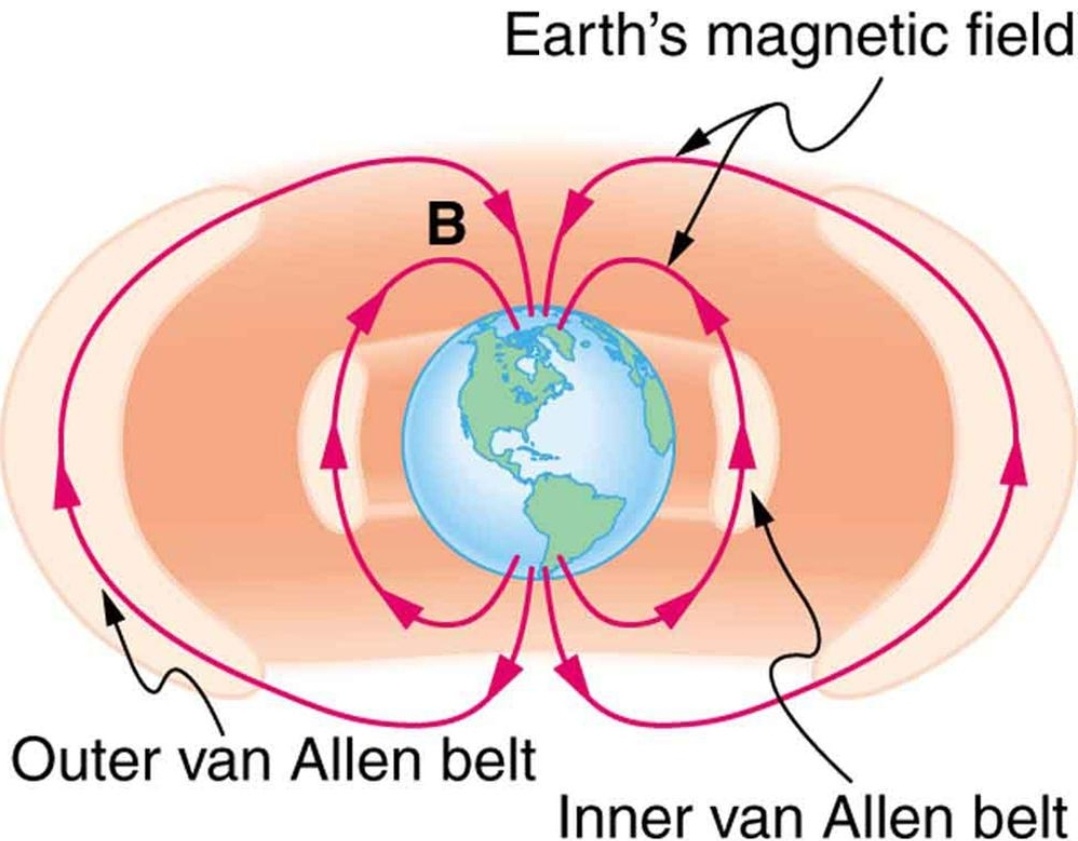
Cosmic radiation isn't blocked by the ozone layer, but by Earth's magnetic field (Van Allen belts).
The Arctic is where Earth's magnetic field lines enter, so cosmic radiation follows these field lines and penetrates more heavily there than other regions.
Think of it like this: the Arctic acts like the south pole of a magnet where field lines loop back in, so cosmic radiation travels along these field lines and penetrates more densely.
As we know, the ozone layer mainly blocks UV rays,
while the magnetic layer protects us from cosmic radiation and high-energy solar particles.
The original post had good content, but if users remember the incorrect parts, it could be misleading later,
so I'm making this correction.

The Most Unlucky People at Jamsil 7-dong Polling Station #2 Right Now
150125 months agoby fluffymole250266
Why There Weren't Enough Ballots This Election
94205 months agoby happykoala132851You shouldn't have misconceptions about science...
53335 months agoby sunnykoala261685
Do you know that North Korea is our main enemy?
76155 months agoby sparklycat992291
The Japanese Cabinet Minister Causing a Stir Among International Otaku
142205 months agoby sunnylynx870905
S-Tier Ability Humans Have.JPG
136125 months agoby brightbunny293015
Why the Defense Ministry Is Completely Responsible for the Conscript's Death (Descendants of the Sun Season 2)
114185 months agoby breezyquail332258
God of Commerce Furious at Lawmaker Insisting He Delete Gaeseyeon Channel
105255 months agoby cozyquail608557
The National Card That Only Exists in 300 Copies.jpg
102305 months agoby jollyllama813168
Cyber troll "Ppukga" current situation.jpg
56105 months agoby fluffysloth381608
Why School Violence Punishments Are So Problematic Right Now.jpg
128235 months agoby gleefulnewt671882
This DC user having fun and vibing with AI...jpg
97215 months agoby livelynewt921090
Starbucks Boycott Movement's Final Goal.jpg
6365 months agoby sunnywolf124774
Unlimited personal liability... but what about the cargo liability...?
96165 months agoby fluffygecko465423- —
Lately on floo there are some fr fr terrible people
13485 months agoby sweetcrane791459 
Baek Jong-won Baekboypizza Review Update ㄷㄷㄷ..jpg
9685 months agoby snappycrane134233
Golden goose meets idiot who slits its belly.jpg
70165 months agoby cheerylynx919141
Why is sleeping with high schoolers for money so hard to understand?
6265 months agoby radiantcrane746721
1.1M Subscriber Channel Accused of Copying 100K Channel's Content
94205 months agoby playfulpuppy230038
School violence controversy? Kim Joon-pyo the Ninja
89185 months agoby radiantseal460005
14 comments
Either way, the North is dangerous, right? Down with North Korea
That Kim Jong-un asshole
To the North! Livin'~~ beautiful Merry Merry real kindness everyone
North Korea's radiation risk is possible
North only! Forward north!
So is the South Pole relatively weaker in cosmic radiation compared to other regions?
Wouldn't it be the same? The South Pole also has concentrated field lines
When they said it moves toward the S pole, I thought everything entering the South Pole also goes to the North Pole
It's less about N or S pole and more about the angle with the field lines—the force is determined by the cross product of velocity and magnetic direction, so if parallel, there's no effect
The South Pole is the same, except there's no actual flight route over it
That's not right. The post above was written with only the North Pole in mind for more intuitive understanding, so it says 'cosmic radiation travels along field lines,' but technically, cosmic radiation travels along any field lines. It's like a two-way highway. But if you look at the diagram, the equator's roads are formed far from and flat relative to Earth, while the South and North Poles have roads formed close to and perpendicular to Earth, so think of cosmic radiation and particles as gyro-dropping and falling vertically into Earth. In conclusion, the South Pole also has massive cosmic radiation penetration
Knowledge appreciation
Wait, magnets attract radiation? That's scary
Technically it's ionized particles from cosmic rays...
So magnetic bracelets actually work then
Ah, so that's why polar bears...
This hits different when you realize how many 'facts' people confidently share at dinner that are completely wrong 😅
Living in such a dangerous place, polar bears be careful
But the atmosphere blocks it, so ground level is fine—polar bears probably worry more about floo posts
That Earth magnetic field diagram is kinda hot
Literally looks like that thing you see when you're doing doggy style
Airplanes are wrapped in aluminum panels, so does it penetrate?
Aluminum can shield against alpha and beta radiation, but gamma rays—the highest energy—can't be shielded. Like in movies, lead is the metal that can shield up to gamma rays. So remember that airplane fuselages block some radiation but not all
I'm curious—alpha and beta rays are charged particles, so I get why they're deflected by magnetic fields, but they can't penetrate metal. Gamma rays are electromagnetic waves, so why would there be more in the Arctic?
Let me rephrase the question: Alpha and beta rays are blocked by airplane aluminum, and gamma rays aren't significantly affected by magnetic fields, so there's no reason for more in the Arctic. So why do Arctic planes get more radiation exposure? The answer is: the culprits aren't alpha, beta, or gamma—it's secondary particles (muons, neutrons, etc.) created when cosmic rays hit the atmosphere. These are almost impossible to block, so think of it this way: more alpha/beta reaches the Arctic → more secondary particles generated → more radiation exposure
North
So you're saying the top hole is relatively the weakest?
The image is kinda suggestive though
Wow, there are two holes
okay but the real question is why do people get SO defensive when you correct them about science stuff
Just saying 'because N to S pole' feels like it'll spread another misconception
Agreed—I want to correct it, but the speedrunner floo post is gone
lol finally someone said it, i was so tired of my uncle explaining vaccines like he got his degree from youtube